





ADVENTURE SERIES
A collection of QUOC rider stories from the front lines of monumental cycling efforts. From cross-country ultras and bikepacking epochs to intense Everesting challenges, the series documents the raw pursuit of pushing human limits, using the bike as a tool for ultimate exploration.
Ella Bloor: The Beauty of Trying
A Munda Biddi Trail FKT Attempt.
Ella Bloor is an endurance cyclist based in regional Victoria who started out on the road and now spends most of her time on gravel and mountain bikes. In this edition of our adventure series, she reflects on her Fastest Known Time attempt on the Munda Biddi Trail, a journey through remote Western Australian forest that ended short of the finish but rich in lessons.

Words by Ella Bloor
There’s something quite special about deciding to tackle something with a starting point, a finishing point and a whole lot of unknown in between. I think that’s what I love most about these adventures. Every unknown you overcome adds another reference point to your catalogue of experience, making the next one feel a little less unknown. Or, as I like to think of it, it’s a bit like collecting Pokémon. You learn their traits, strengths and weaknesses, and slowly build a collection of things you know how to deal with.
The Munda Biddi, meaning ‘path through the forest’ in the Noongar language, is a 1,000+ km off-road cycling trail through the forests and coastal landscapes of south-west Western Australia. Starting in Mundaring, just outside Perth, it winds south to Albany, finishing among turquoise beaches and brilliant white sand. It’s an incredible piece of Australian cycling infrastructure, connecting some of the state’s most beautiful and remote landscapes.
For my Munda Biddi FKT attempt, the plan was to roll out as the sun was rising, giving myself a proper night’s sleep before starting. A key marker for the first stretch was the mining town of Collie, around 320 km from the start. I knew making it there in time to resupply before the shops closed would be tight, so I made the call to remove it from my resupply plan entirely. I also knew I could ride through at least one night fairly comfortably. Okay, comfortably is perhaps a generous description. But I now had a Pokémon in my collection called ‘ride all night’, and I feel pretty confident about what that card entails.
“Adventure isn’t always about pushing forward at all costs.”
- Ella Bloor
The First Night
From pressing start to inching towards sundown on day one, things went smoothly. Pea gravel, wildflowers and plenty of twisting between singletrack and forest trail. It was a pretty wonderful way to spend a day on a bike.
As I reached Dwellingup, the sunset was swallowed by increasingly dark clouds. It was almost as if turning on my helmet light signalled the rain to start falling.
I was hoping to reach Donnybrook by sunrise, which meant ticking off a couple of hundred kilometres in the dark and now wet. This was a rather special-edition Pokémon I hadn’t yet collected: ‘Ride through the night and a storm’.
Like any millennial, I put on a playlist my 15-year-old self would have absolutely loved. When Hilary Duff’s Come Clean blasted through my headphones somewhere in the middle of the singletrack, I felt empowered that some rain wasn’t going to stop me.
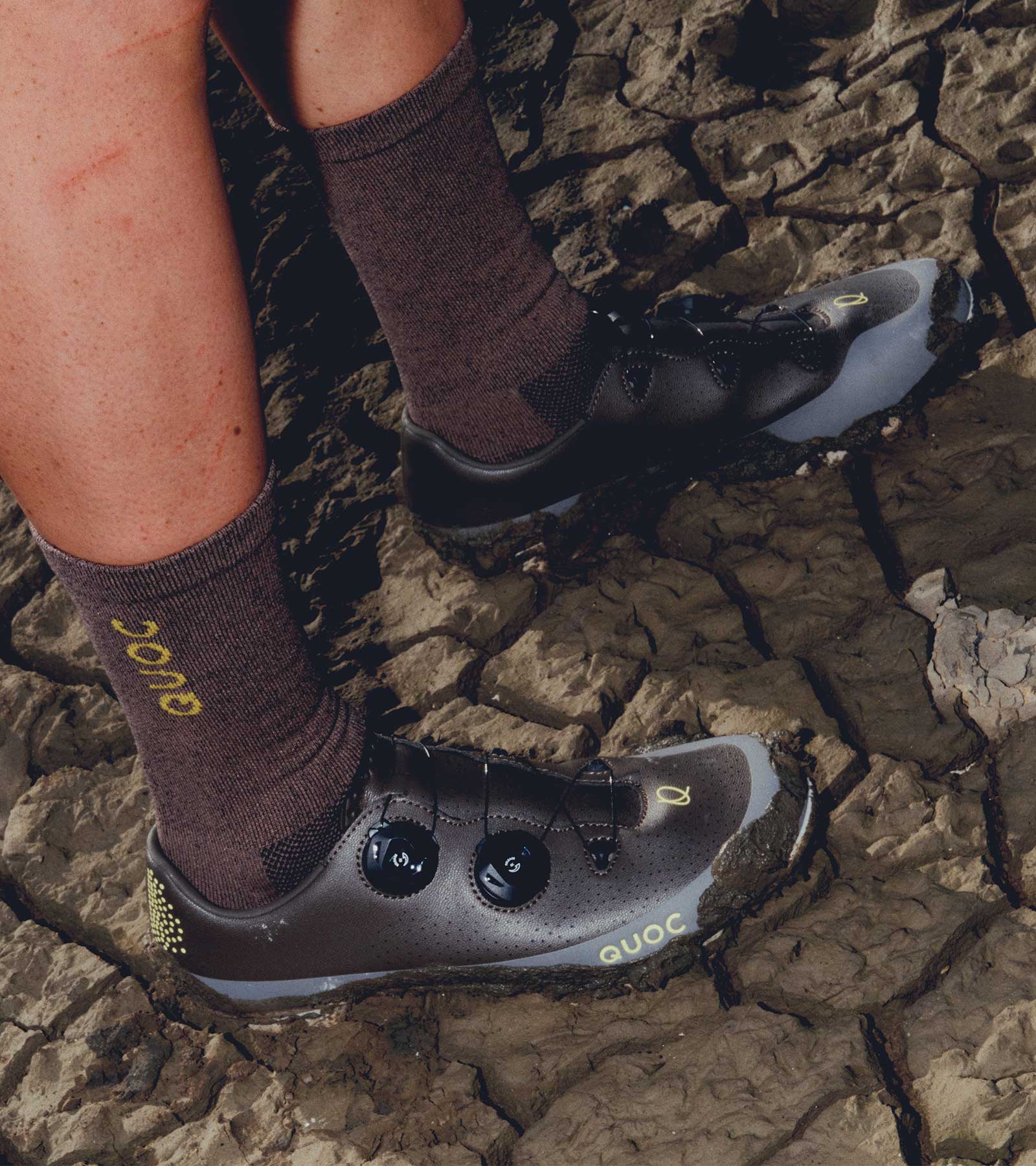
I passed dozens of frogs and kept moving through the mud and puddles that had formed. By the time I reached Collie around 3 am, I was a couple of hours behind schedule and the rain was absolutely belting down. I took shelter in the local public toilet, feeling pretty defeated after eight hours of riding in the dark and pouring rain. With another 80 km to the next town, I decided to take a short nap as the peak of the rain was due to subside.
By 4 am, Sizzles, a local café, opened its doors. A hot cup of tea and a molten-lava-temperature curry were just the inspiration I needed to get moving again.
The trail adjacent to the road was closed shortly after rolling out of Collie, presumably due to recent prescribed burning, so I was spat out onto the road. I probably had some residual PTSD from my trip across the Nullarbor, but riding along the shoulder as roaring road trains passed in the pouring rain wasn’t quite how I’d envisioned this adventure unfolding.
Eventually, I rolled into Donnybrook, around 400 km into the route. The sun was shining, but my knees were feeling the effects of the muddy trails and just about everything I’d packed was soaking wet. I’d gained only a few hours on record pace despite riding through the night and was feeling pretty deflated. I gave myself an hour. Ate some food, laid myself and all my belongings out to dry, and negotiated with myself that all we needed to do was make it to the next town, Nannup, another 70 km down the trail.

Finding A Rhythm
As the kilometres ticked by towards Nannup, I slowly found my groove again. Having spent some time there for the recent Gravel World Championships, the familiarity lifted my spirits. The first night’s ordeal, which had felt a little like riding through a washing machine, was well and truly behind me.
It’s funny how these things work. You learn that if you keep moving, things will often come good again. I was also beginning to appreciate one of my favourite parts of the adventure: the people. I came across a scattering of familiar and new faces along the trail. Despite setting out to ride as fast as possible, the joy of meeting and chatting with people often superseded the pursuit itself. There’s something lovely about sharing a little moment with someone experiencing the same place, albeit at a very different pace or for a very different reason.
I rolled into Manjimup around 10 pm, some 555 km clocked. I’d booked a bed for some rest and got to work on the usual logistics: charging devices, airing out kit and heating up a frozen lasagna I’d picked up in Nannup.
I genuinely love this part of ultra-distance riding. There’s something satisfying about making all the moving pieces work, and the forward thinking that goes into it all.
I knew the little FKT marker was averaging around 12 km/h, set by fellow Aussie, Mikayla Smith, only a couple of weeks earlier, so I made the call to sleep until 3:30 am. That would put me around two hours, or 24 km, behind the record pace. I knew my moving average was sitting somewhere between 17 and 20 km/h, so I still felt there was plenty of opportunity to chip away at the deficit. I was behind where I’d hoped to be after the conditions of the first night, but it still felt within reach, and I was enjoying this very different kind of ‘race’.
“You learn that if you keep moving, things will often come good again.”
- Ella Bloor

Day Three
I woke feeling good and set off with a playlist considerably less mellow than the night before. However, just as the sun was starting to rise, my bike computer decided to have a complete meltdown.
Despite phoning a friend to troubleshoot, rebooting, resetting and eventually attempting a factory reset (multiple times), it continued crashing every time I changed the screen to map mode. I knew a second computer was on my packing list for a reason. Alas.
The trail is exceptionally well marked, but it’s still surprisingly easy to miss a marker, particularly when you’re tired and moving quickly. The markers also look very similar to the Bibbulmun Track, which is essentially the hiking version of the Munda Biddi, and they’re continually intersecting each other. I probably should have accepted the situation a little earlier, and just carried on, rather than whittling away an hour trying to fix it. Another page and learning for the catalogue.
Once I got moving, back at kilometre zero on my computer, I actually started enjoying the simplicity. Without the usual overdose of watts, elevation and upcoming climbs, I was left with time, distance and the odd message from friends and loved ones that would still pop up on my screen.
I think one of the greatest feelings in ultra-distance riding is when everything starts to feel autonomous. You’re completely present, absorbed in where you are and what you’re doing. The decisions become instinctive, the riding becomes rhythmic, and the outside world feels a little further away.
I’d finally found that feeling after around 600 km, and boy, it felt good.

The Unravelling
Then my head started getting heavier and heavier.
I knew about ‘Shermer's neck’, after a friend had recently succumbed to its utter s&^%-ness during the Silk Road Mountain Race. It's essentially a gradual loss of the ability to hold your head up for prolonged periods. It’s not necessarily painful, but your neck slowly turns to rubber, particularly on descents.
I tried a few things to manage it, including strapping my head up with a Voile strap, in an attempt to prolong the inevitable. I quickly realised this was ridiculous, caused strain elsewhere and would probably be pretty horrific if I crashed with my neck strapped to something it shouldn’t be.
I was definitely channelling the “just keep moving” mentality, and the final 50 km into Walpole, around the 800 km mark, were some of the hardest kilometres I’ve ever ridden. I was descending in all sorts of questionable positions, trying to find ways to prop my head up.
Despite the rather questionable bike handling, I’d managed to chip away at the deficit and found myself back on FKT pace, with around 200 km remaining.
I rolled into Walpole, stopped at the bustling Friday-night pub and fuelled up on a pint of Coke and some salty chips to go. I felt surprisingly energetic and motivated. The finish was beginning to feel tangible, and I just needed to chip away at it through the night.
“Sometimes the beauty is simply in being willing to try.”
- Ella Bloor

I set off into the darkness again around 9 pm, enjoying some of the flatter sections that gave my neck a little respite.
Unfortunately, I was about to find out that the next 50 km would make the previous 50 km feel like an absolute joy.
Ordinarily, this would have been one of the most fun sections of the entire trail. Think Derby, Tasmania, plonked into the middle of an 800 km adventure: berms, humps and flowing trail you’d ordinarily be grinning your way up and down.
But my neck was not playing ball. Every undulation became an exercise in managing my increasingly pathetic neck strength. I’d ride for five minutes, lie down for five minutes, get going again, hit a descent and eventually have to stop once more. The longer descents were becoming increasingly sketchy as my head simply wouldn’t stay where I needed it to.
I was still desperately curious about what lay ahead, and the finish wasn’t far away. But I was becoming increasingly aware that the way I was riding was compromising my safety.
When my navigation failed me amongst the labyrinth of intersecting trails, I wasn’t always sure I was still on the Munda Biddi, there was limited to no reception, and at times, even my satellite tracker seemed to be struggling. It was the first time I’d genuinely appreciated just how easy it would be to become properly lost in the Australian bush.
I began thinking about what would happen if I crashed badly. Whether by chance or as a consequence of my increasingly compromised riding position, it would have been naive to assume help would find me.
Adventure isn’t always about pushing forward at all costs. It’s about making decisions along the way, understanding the risks and taking responsibility for yourself and others.
So around 1:30 am, I called it.
Not because I didn’t want to keep going. Quite the opposite. I was still curious about what the final kilometres held, still wanted to see how far I could go, and certainly hadn’t run out of desire to finish what I’d started.
But I also had to consider the people waiting for me at home, the people who had helped me get there, and the many adventures I still dream of having.

The Beauty of Trying
I left Western Australia with nothing but respect for the land and the trail that wound through it.
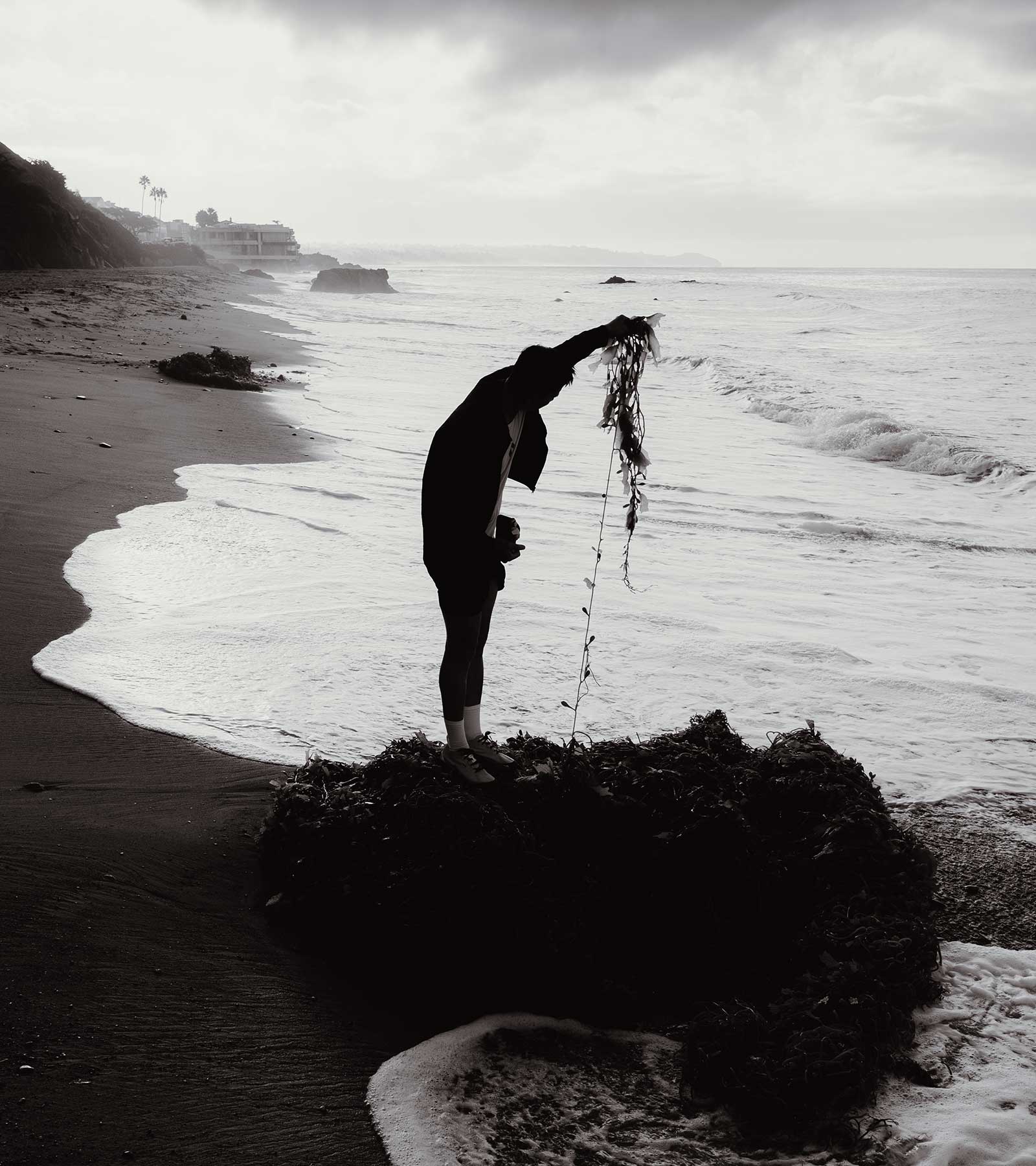
A few images in Phillip’s collection offer a glimpse into just how remote and incredible this trail really is. Much of it is incredibly difficult to access, and it’s hard to communicate the scale of a place where you can spend hours travelling without seeing another person or a road.
Looking at a line on a map, it’s easy to appreciate the distance. It’s much harder to appreciate the landscape, the isolation and the sheer magnitude of having more than 1,000 km of dedicated cycling trail winding through south-west WA. I’m incredibly grateful to have experienced even a small part of it.
I came away with a few more Pokémon in my collection, a greater appreciation for the people and places along the trail, and a healthy respect for just how much there is to learn when you venture somewhere unfamiliar.
I’m still a little curious about this one, but at peace with the adventure it was.
I don’t think every attempt needs a record, a finish line, or a neat ending to have been worthwhile. Sometimes the beauty is simply in being willing to try. In following a line on a map, finding yourself somewhere you never quite imagined, being humbled by the landscape and coming home with a little more knowledge than you left with.
The unknown is still out there, but the catalogue keeps growing.
Photography: Phillip Sage
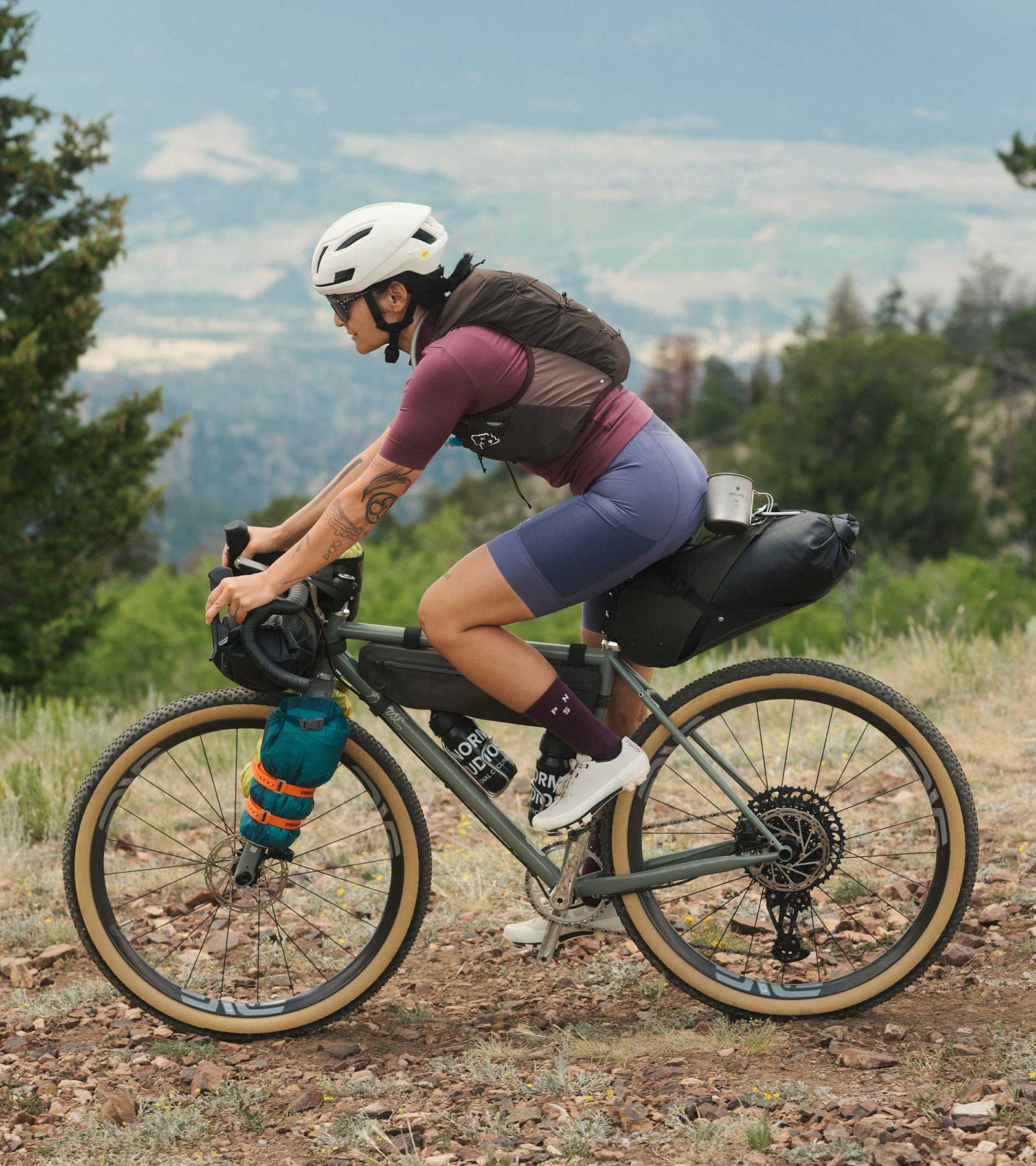
What Ella Wears