


PRO RIDER SERIES
Stories from QUOC's professional racers that go beyond the results sheet. We catch up with emerging talents to established veterans, exploring the people, challenges and ambitions shaping modern bike racing.
Joël Kyaviro: Dreaming Big
From growing up amid conflict in Goma to becoming DRC national champion and racing internationally, Joël Kyaviro has built a career against the odds. Travelling and racing across East Africa and eventually to the international race scene, cycling gave him a way forward through loss and upheaval most will never know. “Sport changed my life,” he says — and now, through the Tumaini Academy he founded in 2025, he is giving the next generation the chance he once had to find on his own, and teaching them, above all, to dream big.
“It’s not because of where you’re from that you can’t achieve something.”
- Joël Kyaviro

Before cycling, what was life like growing up in the DRC?
I’m from Goma, in the east of the DRC. People mostly know one thing about the area — that there's a lot of war. And there's the volcano, Nyiragongo. I think those are the two things people know it for. But Goma is a really great city, a really good place, I can assure you. There's the lake, and Virunga Park just next door. A lot of talented artists and athletes too.
How did you end up in Goma?
We were displaced because where we were, it was catastrophic — there was war. It was constant, always fighting, always conflict with rebels. We moved to Goma because of the security situation.
Then around 2012, the war found us again in Goma. A bomb fell near our house and hit my whole family. It killed my older brother and injured almost everyone else. A lot of our family had shrapnel injuries. It was a very difficult time.
How did cycling enter your life?
Before I started racing, we had a bike at home called Matabaro. I always rode that, and I’d also rent bikes at the tracks. In Goma that's a real thing — there are places where you can rent a bike to learn, or just for fun.
My other brother, Jimmy, was the one who really started cycling. In 2016 there was a big race in Goma, and he entered and won. That race opened doors for him. He was called up to represent the DRC in Kinshasa, then he went to South Africa and started racing there. That’s when I started thinking about what cycling could be.
Did he encourage you to race too?
He wanted me to start cycling, but he always pushed me hard on school first. Every time he caught me taking the bike just to ride around, he’d say, “No, you need to finish your studies.” Honestly, that’s helped me a lot today. He’s also the one who bought my first bike. That’s when I started cycling for real.
Do you remember your first race?
My first race was Vélo Vacances, during the school holidays. I didn’t even do that well — maybe 10th — but for me it was such a joy, doing that kind of challenge for the first time.
The next race, I won. After that, I really started to dream. I thought, I just won a race for young riders, and I was the best. I was the best in Goma. By 2018 and 2019, I was winning the junior competitions and even started beating the seniors. But I still wasn’t allowed to go and compete elsewhere. My brother insisted I finish my studies first. In 2020, I got my diploma. I was 18.

What happened when you were finally ready to focus on cycling?
Unfortunately, COVID came. I stopped riding for a while because there was nothing you could do, and I went looking for work. I became a pizza delivery rider. I delivered food around the city, and it made me happy because I was still on the bike. People didn’t really know that a guy with a bike could deliver pizza, so we were kind of a novelty on the internet. It was pretty cool.
After COVID, I started training again. In 2022, I joined a group of young riders from Rwanda, Uganda, Burundi, Tanzania and the DRC for a 55-day, more than 6,000-kilometre journey across East Africa.
What was the idea behind the 6,000 kilometre trip?
It was really a thing for peace. All of us young people came together to show the world that we’re all the same, that there's no need for war between countries.
Travelling to other countries also opened my eyes. You meet other cyclists and realise there are so many competitions out there, while back home there’s nothing. I started thinking that maybe I could travel too.
After that tour, I didn’t let up. I started training much harder and competing more. I started thinking, maybe I could become DRC champion. And in 2023, I made it happen.
“I said to myself: you’re the first rider from the DRC, you just joined a team — you have to succeed.”
- Joël Kyaviro
What changed after becoming national champion?
I wasn’t with a professional team yet; I was part of my local club, Goma Cycling Club. After winning the national championship in July, I immediately joined Team Amani as a trainee (stagiaire). At the same time, I had the opportunity to join the UCI development program.
Eventually, Team Amani offered me something that could allow me to earn a living from cycling—a salary and a real contract. I spoke with my brother and the president of Goma Cycling Club, and they both advised me to go where I could make a living from cycling. So, in 2024, I joined the Black Mamba development team.
What was it like entering professional cycling from Goma?
I was really just learning. When I joined them, I’d never used a proper bike like the ones they had. It was really hard to adapt to new bikes with electronic groupsets. Even just changing gears — I didn’t know how to shift.
You’re coming from a place with no cycling culture. In Congo there really isn’t a cycling culture. It’s been more than seven years in Goma since there was a big competition, a real event.
The kids are there and there’s so much talent. It’s disappointing. The kids who ride are just resilient. They push through on their own because it’s not easy to ride when there are no opportunities.

Did you feel like you were carrying the expectations of other riders from the DRC?
A lot. I told myself, “You're the first rider from the DRC, you just joined a team — if you fail, the team won't look at other young Congolese riders again.”
I have to succeed.
I put a lot of pressure on myself because I wasn’t only trying to motivate myself. I was trying to motivate the young riders back home too. I told them, “I'm here, I'm going to fight so we can bring some of you here too.”
You were in Kenya when the conflict returned to Goma in 2025. What was that like?
I was in Kenya when the fighting started. I was actually supposed to go back, but my mother told me, “No, you don't have the right to come back, you have dreams to fulfil.”
She told me that while there was gunfire in the background. Everyone in the house was crying because we were really afraid the same thing would happen again, the same as in 2012.
The training sessions in 2025 were really difficult for me. Mentally I wasn’t ready.
Were you able to stay in contact with your family?
That was one of the hardest things. I’d be in training and just stop, thinking, my family’s in a place where there’s shooting. Then they cut the internet in Goma, and with no electricity to charge phones, I went a week without talking to them.
I lost people close to me during the war — sometimes I’d check my phone and see a message saying, “Oh no, he's gone too.” It was really bad, but I’ve kept moving forward.
That experience is tied to why you started Tumaini. What prompted you to start it in that moment?
In 2025, right after the war, I created the academy. I’d always planned to do it once I retired, but I couldn’t wait. I was watching young people with nothing to do being pulled towards armed groups, and I knew I had to give them another path. Sport changed my life. If I hadn’t had good guidance, I could have gone down that same path myself, right after losing my brother — I could have got lost in all that. But I found sport.

What do you hope Tumaini can do for the community in Goma?
I want Goma to be known for more than war — for its champions, and its young people’s futures. Tumaini means “hope” in Kiswahili, and more than fifty children come to train with us now. Across the whole of the DRC, it’s still the only academy of its kind. At the moment, we’re still building up resources. The riders are currently sharing just nine bikes between them. But it’s growing all the time, and we’re getting there.
“We don’t have the same chances, you know. But we don’t give up on our dreams because of that.”
- Joël Kyaviro
What's it like to get to the races? What do you need to overcome to get to a country like Spain for The Traka?
On the visa side, it’s always really complicated. I got lucky, honestly. My team and I put together a proper case, and the embassy granted it. I left Goma by motorbike with my bags and two friends who helped me. We went to the border crossing with Rwanda, then I took a bus to Kigali, about six hours. From there I took another car to the airport, and that’s where I took the flight to Spain. It was really a lot. I was extremely tired by the time I got to the start line.
When people see you on a start line in Europe, they don't necessarily see everything that happened before you got there. What do you want them to understand?
We don’t have the same chances, you know. But we don’t give up on our dreams because of that. There’s a lot going on, especially in my country. Because of the war, people don’t know what Congo can do in sport.
When I won that UCI stage in Cameroon, everyone was like, “No, a Congolese guy — what's he doing here?” It was a huge surprise. Everyone was happy to see a Congolese rider take a stage.
It gave people a boost, and it gave hope to the youth too. I showed that we can do something — that we’re not limited. It’s not because of where you’re from that you can’t achieve something. So you always have to believe it, like I do. I dream a lot.
And yeah, I dream really big.
SUPPORT TUMAINI ACADEMY
Founded by Joël in 2025, Tumaini Cycling Academy pairs cycling with education for young riders aged six to 17 in Goma, where more than fifty of them share just nine bikes. Each $150 puts one more child on the start line, with a bike, helmet and kit to call their own.
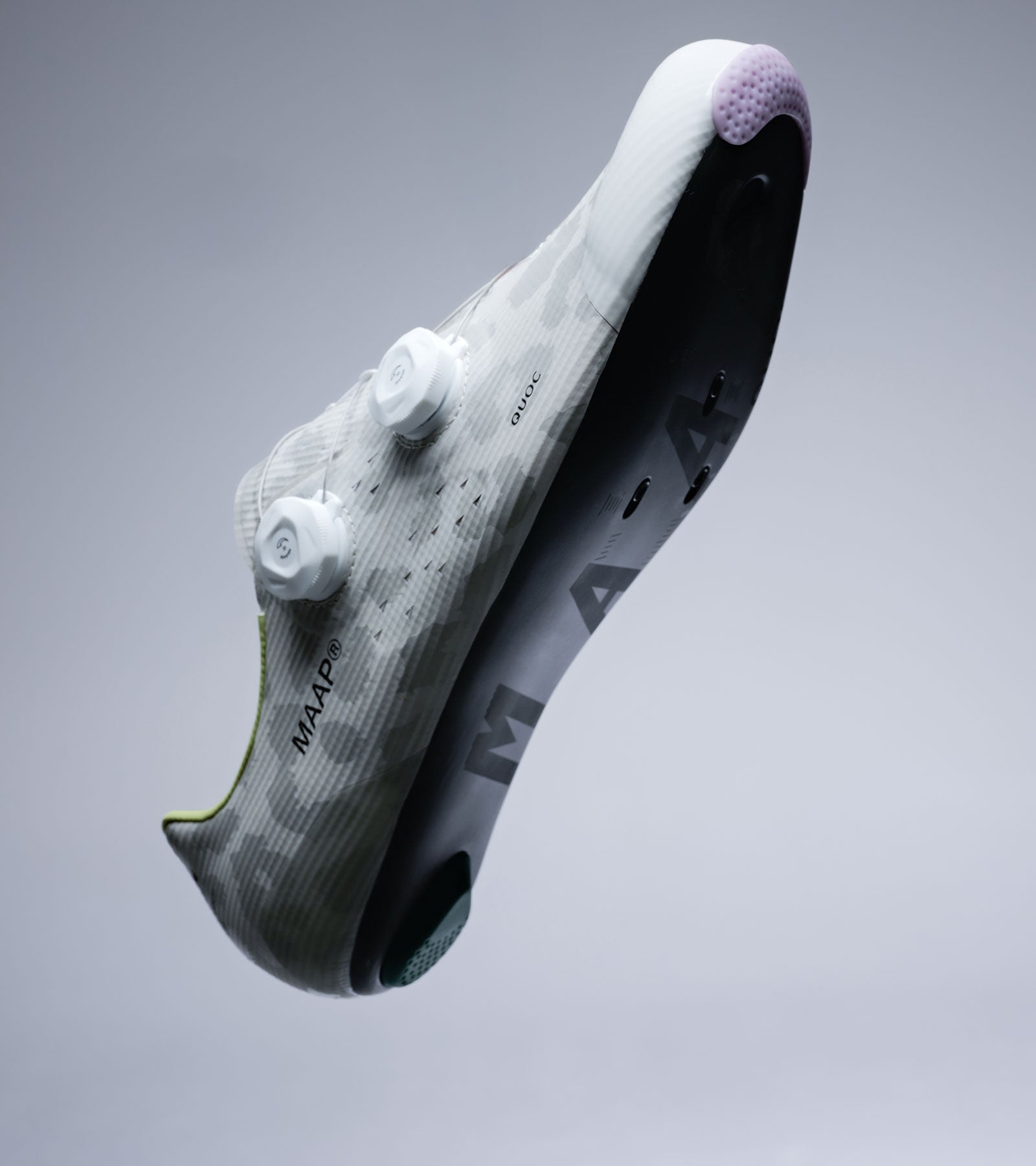
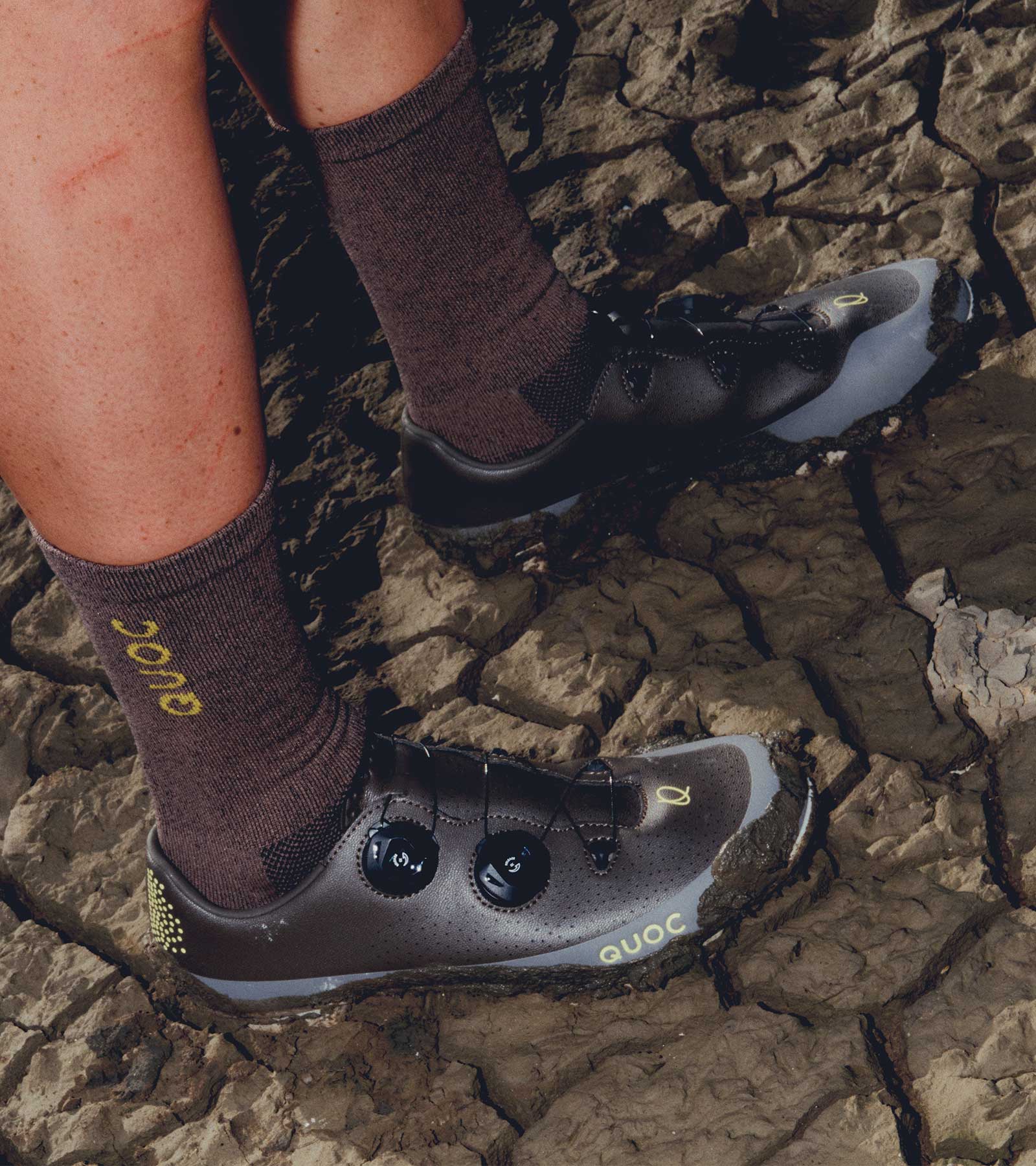
What Joël Wears: